

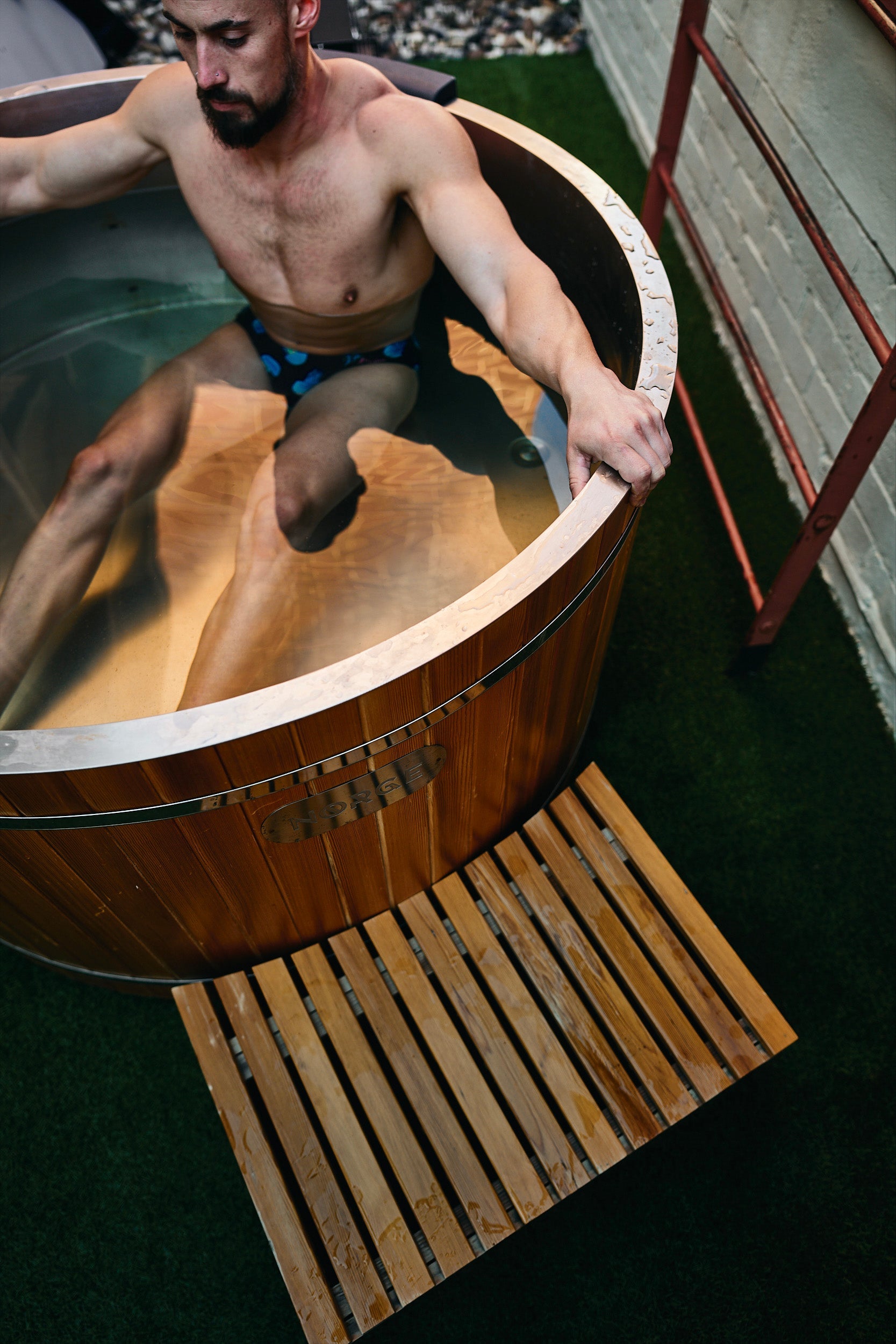
If saunas are the warm hug your body loves, cold immersion is the sharp, clarifying exhale afterward. Once the preserve of elite athletes and polar swimmers, cold-water immersion (CWI) and ice baths are now mainstream for people chasing faster recovery, deeper sleep, sharper mood, and even better long-term health. Below we unpack what actually happens to your body in cold water, the science-backed benefits (including some emerging — and pleasantly surprising — ones like improved sleep and injury rehabilitation), plus safe, practical guidance for getting started with Norge ice baths and pairing them with sauna for maximum effect.
What is cold immersion therapy?
Cold immersion therapy means exposing the body (partially or fully) to cold water — typically in the range of ~0–15°C (32–59°F) — for short periods (seconds to minutes). Common approaches:
-
Ice baths / Cold water immersion (CWI): full body or waist-deep immersion in 8–15°C for ~2–15 minutes.
-
Cold showers: less intense, easier to adopt.
-
Contrast therapy: alternating hot (sauna/steam) and cold (bath/showers) cycles.
-
Whole-body cryotherapy: very cold air chambers (different technology — often shorter exposures).
What matters most is dose (temperature × time) and timing (after workouts, before bed, or during rehab).
How cold immersion works — the key physiological mechanisms
Cold exposure triggers a short cascade of physiological responses that explain its benefits:
-
Vasoconstriction → reduced swelling & fluid accumulation. Cold blood vessels tighten, lessening edema and the pooling that follows injury or intense exercise.
-
Reduced local metabolic rate and inflammation. Lower tissue temperature slows metabolic demand in injured tissue and can blunt the inflammatory cascade that causes pain and secondary damage.
-
Neurochemical surge (norepinephrine, dopamine, endorphins). Cold raises circulating norepinephrine and triggers endorphins, producing analgesia, alertness, and mood lifts.
-
Autonomic shift and HRV effects. The rapid cold shock followed by recovery can increase parasympathetic tone (improving heart-rate variability) with regular, controlled exposures.
-
Brown adipose tissue (BAT) activation and metabolic effects. Repeated cold exposures stimulate BAT activity, increasing calorie burning and improving glucose metabolism in some people.
-
Cold-induced sleep-thermoregulation. Lowering skin and core temperature can help the body enter sleep more easily (our bodies sleep better when core temp falls), plus the parasympathetic rebound supports restorative sleep phases.
-
Analgesia via sensory gating. Cold stimulation can “gate” pain signals in the nervous system, reducing perceived soreness and pain short-term.
Primary benefits (what the science and practitioner experience say)
1. Faster muscle recovery and reduced DOMS
Cold immersion reliably reduces perceived soreness and markers of acute muscle damage after intense exercise. Athletes report faster recovery between sessions and improved readiness. Practical note: while great for short-term recovery (games, back-to-back sessions), routine daily icing after strength training may blunt some long-term muscle-growth signals — use strategically.
2. Reduced inflammation & swelling — helps acute injuries
For sprains, contusions and soft-tissue injuries, cooling reduces swelling and secondary tissue damage by decreasing blood flow and metabolic demand at the injury site. When combined with elevation and compression, it’s a foundational acute care tool.
3. Improved sleep quality (emerging but convincing)
Many users report quicker sleep onset and deeper rest after evening cold exposure. Mechanistically, cold lowers core and skin temperature and triggers parasympathetic recovery — both conducive to sleep. For people struggling with sleep continuity or sleep onset, a short cold immersion session (timed appropriately) can improve sleep latency and perceived sleep quality.
4. Enhanced mood, clarity, and resilience
Cold exposure produces a measurable noradrenergic and endorphin response that increases alertness and lifts mood immediately after immersion — that “clean, focused” feeling many users describe. Some small studies and anecdotal programs also report benefits for mild depressive symptoms, though it should not replace clinical care.
5. Injury rehabilitation & tissue protection
Beyond acute swelling control, cold immersion can reduce secondary hypoxic injury in damaged tissues and reduce pain during early rehab. When used judiciously alongside progressive loading and physiotherapy, cold helps patients tolerate early movement and reduces pain barriers to rehab.
6. Immune and metabolic effects
Short cold exposures can transiently increase circulating immune cells and modestly alter cytokine profiles. Repeated cold training appears to improve cold tolerance and increase BAT activity — a metabolic pathway that can augment glucose handling and raise resting energy expenditure in some people.
7. Cardiovascular training and thermoregulatory benefits
Regular cold exposure improves vascular responsiveness and may increase heart-rate variability — signals of better autonomic regulation. Contrast therapy (sauna + cold) trains the circulatory system to adapt, which many users describe as “invigorating” with long-term cardiovascular feel-good benefits.
8. Skin tone and circulation
The vasoconstriction/vasodilation cycle from cold (especially when alternated with heat) improves microcirculation and can leave skin looking fresher and more “toned” — a cosmetic bonus many users enjoy.
Novel benefits worth spotlighting
Sleep — timing is everything
Use a short, cool immersion in the hour before sleep to encourage core temperature drop and parasympathetic rebound. Avoid extreme cold immediately before bedtime for sensitive individuals — a brief, controlled exposure (and a period of passive warming to comfort) is the sweet spot.
Injury rehab — more than icing
Cold immersion isn't just “icing” — when integrated into a rehab plan it:
-
reduces early swelling and pain, allowing earlier safe movement;
-
limits secondary metabolic injury after blunt trauma;
-
can improve tolerance for therapeutic loading (movement is key to healing).
Work with a clinician to balance cold’s anti-inflammatory effects with the need for controlled inflammation in tissue repair.
Mental resilience & stress tolerance
Regular, repeated cold exposures build mental discipline and biological tolerance to stressors — some users report better calm under pressure and faster emotional recovery after stressful events.
Practical how-to (safe, effective protocols)
Always consult your doctor if you have heart disease, uncontrolled hypertension, known cardiac arrhythmia, pregnancy, or other serious medical conditions.
Beginners
-
Start with cold showers or partial immersion for 30–60 seconds.
-
Build to 2–3 minutes at cooler temperatures over 1–2 weeks.
Recovery protocol (typical athlete use)
-
Temperature: 10–15°C (50–59°F) is common for recovery.
-
Duration: 5–12 minutes. Shorter for colder water.
-
Frequency: After intense workouts or events (not every training session if your goal is hypertrophy adaptation).
Sleep enhancement (gentle approach)
-
Timing: 30–60 minutes before bedtime.
-
Temperature/duration: Cooler but comfortable immersion / shower for 2–5 minutes to aid thermal downshift.
Acute injury
-
Use cold as part of RICE/PEACE & LOVE frameworks: short, targeted immersions or ice packs initially, then guided rehab. Limit total continuous exposure and avoid numbness.
Contrast therapy (sauna + cold)
-
Hot (sauna) 8–15 minutes → cold plunge 30 s–2 min → repeat 2–3 cycles. This trains circulation and gives a powerful subjective recovery and mood boost.
Safety pointers
-
Never immerse alone if you’re new or very cold-sensitive.
-
Watch for confusion, loss of coordination, numbness, or palpitations — stop immediately.
-
Pregnant people and those with cardiovascular disease should seek medical clearance.
-
Don’t overuse: prolonged or excessively frequent cold exposures can impair tissue healing and blunt long-term adaptive signaling from training.
Integrating with Norge Saunas & Ice Baths
At Norge, we design systems for smart, safe contrast therapy. Using a Norge ice bath after our saunas is a classic Scandinavian ritual with measurable benefits: inflammation control, circulation training, and a huge endorphin hit. If your goal is performance or recovery, pair targeted cold immersion sessions after competitions or hard sessions. For sleep and mental health, shorter, evening immersions or contrast cycles can be soothing and restorative.
Bottom line
Cold immersion therapy is powerful, versatile and — when used correctly — safe. It offers immediate perks (less soreness, better mood, reduced swelling) and longer-term wins (improved thermoregulation, metabolic nudges, and better autonomic balance). Two practical rules to get the most benefit: (1) dial the dose: colder = shorter, warmer = longer, and (2) match the tool to the goal: acute recovery vs. long-term adaptation vs. sleep.
Want to bring the ritual home? Explore Norge’s ice bath options and learn how to pair them with our saunas for scientifically informed contrast therapy that feels as good as it works.
Quick FAQ
Is cold immersion safe every day?
It can be for many people if doses are reasonable, but daily cold after resistance training may blunt hypertrophy signals. Use daily for mental resilience or sleep if it feels good and you’re medically cleared.
How cold is too cold?
Anything that creates numbness, confusion, or shivering uncontrollably is too cold. For most people, 10–15°C for several minutes is effective and safe; colder requires shorter time.
Can cold immersion ‘heal’ injuries faster?
Cold helps control swelling and pain early, which supports rehab, but it’s not a stand-alone cure. Combine with proper loading, physio, and medical guidance.
Share:
Not All Saunas Are Built Alike: The High Cost of Low-Quality Materials vs. Premium Wood Craftsmanship
Why Cold Immersion Beats Cryotherapy — A Deep Dive