

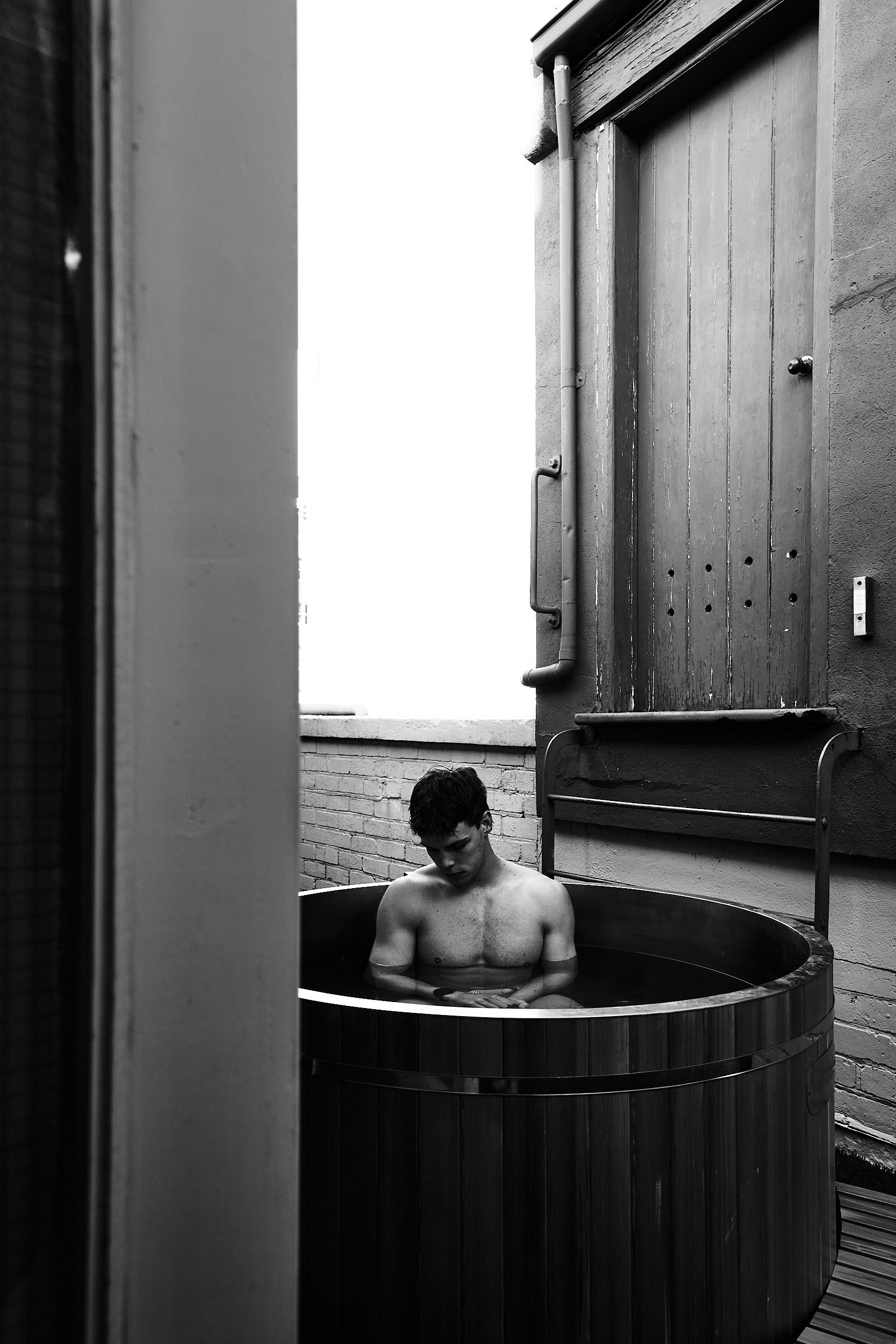
If you’ve been shopping recovery tech, you’ve probably seen two headline options: full-body cryotherapy (WBCT) chambers — flashy pods promising ultra-low temperatures and 2–3 minute sessions — and the old-school ice bath: simple, cold, very wet. Both promise faster recovery, better sleep, less soreness, and mood benefits. But when you dig into how they work, who they help, and what the trade-offs are, cold immersion (ice baths) comes out ahead for most people: more effective cooling, clearer physiological impact, better integration with rehab and contrast therapy, lower cost and complexity, and a richer user experience.
Here’s why — we’ll go step-by-step through the physics, the biology, the practicalities, safety, and the down-to-earth recommendations you can use with Norge ice baths and our sauna systems.
Short version (TL;DR)
-
Water transfers heat far more efficiently than cold air — an ice bath cools muscle and tissue faster and deeper than a cryo chamber, even though cryo is colder by temperature alone.
-
Cold immersion produces stronger, more reliable physiological effects (reduced swelling, meaningful norepinephrine/endorphin response, better circulation training) that translate to recovery, sleep, and rehab benefits.
-
Ice baths are easier to access, safer to use at home, lower-cost, and pair beautifully with sauna-based contrast therapy — a combination backed by physiology and real-world experience.
-
Whole-body cryotherapy offers novelty and speed but with more unknowns, higher cost, and weaker mechanistic advantages for most recovery and rehab goals.
The physics you need to know: why water wins
Two cold things can’t be compared only by thermometer readings. How heat leaves the body depends on the medium:
-
Thermal conductivity & heat capacity: Water has much higher thermal conductivity and heat capacity than air. That means a body in 10–15°C water will lose heat far faster than a body in −100°C dry air. The amount of heat transferred per second is dramatically greater in water, so tissues cool faster and more deeply.
-
Convection vs conduction: Water envelops the body and conducts heat away uniformly; cryo air is still mostly convective and patchy — the cold air flows around the skin but doesn’t make the same consistent contact as water.
-
Perceived vs effective temperature: Cryo chambers are very cold (e.g., −110°C to −140°C), but those extreme temps in dry air don’t equate to deeper muscle cooling. In practice, ice-water at modest temperatures can achieve greater subcutaneous and intramuscular temperature reduction.
-
Rewarming and vascular response: The vasoconstriction and subsequent reactive vasodilation after immersion are more pronounced and controllable with water, creating a stronger “circulation training” effect when paired with heat (sauna → plunge).
Put simply: cryotherapy looks colder on paper; ice baths are colder where it counts — the tissue.
The biology: physiological mechanisms that matter
Both modalities aim to create a cold stress that triggers biological responses. But because immersion cools tissue more effectively, it drives several mechanisms more reliably:
-
Immediate vasoconstriction and edema control. Water immersion reduces blood flow at the surface and in superficial muscle beds more efficiently, limiting swelling and fluid accumulation after injury or hard training.
-
Reduction in local metabolic demand. Faster tissue cooling suppresses local metabolism and the inflammatory cascade in injured tissue — this lowers secondary damage and pain.
-
Neurochemical surge (norepinephrine + endorphins). Immersion provokes a robust noradrenergic response and endorphin release, yielding analgesia, improved mood, and alertness. Users consistently report a sharper, more sustained “lift” after an ice bath than after cryo.
-
Autonomic training. The cold shock and recovery cycle in immersion produces a strong sympathetic activation followed by parasympathetic rebound, improving heart-rate variability and autonomic flexibility. These circulation and autonomic benefits are the foundation of contrast therapy (heat + cold cycles).
-
Metabolic adaptations. Repeated immersion activates brown adipose tissue and improves glucose metabolism in ways that are physiologically meaningful; the pronounced tissue cooling of immersion makes these pathways more reliably stimulated.
-
Sensory gating and analgesia. Cold immersion provides powerful sensory input that “gates” pain signals, reducing perceived soreness more effectively than dry air exposures for many users.
Evidence & outcomes — recovery, sleep, and rehab
-
Muscle recovery / DOMS: Ice baths consistently reduce perceived soreness and some markers of muscle damage after intensive exercise. That’s because they produce deeper tissue cooling and stronger localized physiological change.
-
Sleep: Cold immersion helps the body achieve the thermal downshift needed for sleep onset — immersion lowers skin/core temperatures and produces a calming parasympathetic rebound. Many athletes and biohackers prefer a short pre-bed immersion or contrast cycle for better sleep.
-
Injury rehabilitation: For acute soft-tissue injuries (sprains, bruises), immersion helps control swelling and pain and allows earlier movement in rehab. The deeper tissue cooling helps protect injured cells from secondary metabolic stress — an advantage over superficial cooling from cryo.
-
Mood & mental resilience: The sustained neurochemical response and the ritualized challenge of immersion support mood improvement and resilience training more consistently.
-
Cryotherapy’s role: Cryo can provide a quick, intense sensory shock and might be useful for an immediate alertness boost or a novelty wellness treatment. But its evidence for superior recovery, muscle cooling, or long-term adaptive benefit is thin and mixed; many studies are small or industry-funded. For physiological endpoints tied to tissue temperature and inflammation, immersion has clearer mechanisms.
Safety, regulation, and risk profile
Cryotherapy risks and caveats:
-
Cryo chambers operate at extreme temperatures and require trained operators and strict safety protocols. Risks include cold burns, skin injury, and—rarely—more serious events if proper screening and supervision are absent. Because cryo is “fast and very cold,” there’s less time to detect or adapt to adverse responses.
-
Regulatory oversight and standardization across cryo providers are variable.
Ice bath risks and caveats:
-
Immersion is higher-control: temperature can be adjusted, exposure is longer and thus easier to monitor, and it’s intuitive to self-regulate. The main risks are hypothermia with excessive exposure, cardiovascular strain in susceptible individuals, and falls or fainting if someone becomes lightheaded. All of these are mitigated by sensible protocols and medical clearance where needed.
Bottom line: For home and supervised clinical use, immersion carries lower catastrophic risk and greater controllability. Cryo requires more professional oversight and brings more logistical and safety overhead.
Cost, accessibility, and sustainability
-
Cost & access: Cryo requires specialized equipment, trained staff, and, in many locations, appointment-based access and notable per-session fees. Ice baths are far more accessible — they can be installed at home or in gyms, used whenever you need them, and paired with a Norge sauna for contrast therapy.
-
Operational footprint: Cryo systems rely on industrial refrigeration solutions or liquid nitrogen—both energy- and resource-intensive. Ice baths are simpler to run and, especially when using modern chillers with efficient controls (or even passive ice + cooler systems), can be a lower-energy, more sustainable option.
The experiential argument: ritual, depth, and control
Cold immersion delivers a full-body, immersive ritual. The envelope of water, the sensation of deep cooling, the subsequent warming — these are not just physiology; they matter psychologically. Contrast therapy (sauna → plunge) creates a powerful hedonic loop: heat, shock, euphoria, and deep recovery. That ritual supports adherence: people stick with what feels meaningful and effective. Cryo’s quick dry blast arguably feels novel, but it lacks the slow, somatic change and the sense of progression that drives ritualized wellbeing.
When cryotherapy might still be useful
To be fair: cryotherapy is not worthless. It can be helpful when:
-
You want a quick, time-efficient sensory boost (2–3 minute sessions).
-
You don’t have access to a safe immersion option and need a supervised cold shock.
-
You’re in a clinic or elite sports setting where cryo is offered as one of multiple tools and staffed properly.
But it’s rarely superior for injury rehab, durable recovery, sleep, or metabolic adaptations — the very outcomes most people seek.
Practical protocols: how to use immersion (and avoid mistakes)
Recovery (post-game / post-hard training):
-
Temperature: 10–15°C / 50–59°F
-
Time: 5–12 minutes (shorter for colder temps)
-
Frequency: after heavy load sessions or competitions. Avoid routine daily immersion immediately after hypertrophy training if muscle growth is the primary goal (cold may blunt some anabolic signaling).
Sleep enhancement:
-
Time: 30–60 minutes before bed
-
Temperature/duration: cool but tolerable for 2–5 minutes to encourage thermal downshift and parasympathetic rebound.
Injury rehab (acute):
-
Use targeted short immersions or local ice for the first 48–72 hours to control swelling, then shift to graded loading + therapeutic cold as advised by clinicians. Don’t overcool: the goal is to manage swelling and pain while enabling safe movement.
Contrast therapy (sauna + plunge):
-
Sauna: 8–15 minutes → Cold plunge: 30 sec–2 min → Repeat 2–3 cycles. Finish with a comfortable recovery period and hydration.
Safety checklist: never immerse alone if you’re inexperienced; stop if dizzy or numb; get medical clearance if you have cardiovascular disease, uncontrolled hypertension, arrhythmia, or are pregnant.
Pairing with Norge saunas (FBG-281 & S-23-4P)
Contrast therapy is where cold immersion genuinely shines. With the FBG-281 and S-23-4P we design saunas that hit the heat portion perfectly — steady, enveloping warmth that primes vasodilation — and Norge ice baths deliver the decisive cooling that creates the vasoconstriction/vasodilation cycle. The result is stronger circulation training, faster perceived recovery, and a ritual that feels great and works.
The honest caveats
-
Training adaptation vs immediate recovery: Repeated cold after strength training can blunt some long-term hypertrophy adaptations. Be strategic: use immersion for recovery phases or competitions and be cautious during hypertrophy-focused cycles.
-
Evidence base nuance: Cryotherapy research is mixed and often limited in scale. Cold immersion has a longer, more consistent track record in sports medicine and rehab literature. That said, both fields would benefit from larger, independent RCTs on long-term outcomes.
Final takeaway
Whole-body cryotherapy sells an extreme temperature and a fast, flashy experience. But cold immersion wins on substance: better heat transfer, deeper and more meaningful tissue cooling, stronger and more reliable physiological responses, superior safety and accessibility for home or clinic use, and a better fit with evidence-backed recovery and rehabilitation protocols. For most people — from elite athletes to weekend warriors, sleepers and people rehabbing injuries — an ice bath (especially when paired with a high-quality sauna like Norge’s FBG-281 or S-23-4P) delivers more measurable benefit per dollar, per risk, and per minute invested.
Want to try contrast therapy the Norge way? Check out our ice baths and sauna bundles and get a practical, goal-focused protocol tailored to sleep, recovery, or rehab. Your body (and your clinician) will thank you.
Always consult a healthcare provider before beginning a new cold-therapy protocol.
Share:
How Cold Immersion Therapy Supercharges Recovery, Sleep, Rehab — and More
The Impact of Contrast Therapy on Muscle Protein Synthesis and Recovery